

Hi, I'm Mallory.
I like making sense of messy ideas—that chaotic magic that happens between brand strategy and execution; organizing the ambiguity and turning it into something organized and easy to understand.
My background combines operational leadership, cross-functional governance, stakeholder alignment, and large-scale production execution.
When I am not working, you can find me hanging out with my dogs, or volunteering as a literacy tutor for adult ESL students.
Maintaining Brand Integrity at Scale
Operationalizing brand standards across regulated SKUs in a high-change retail environment.
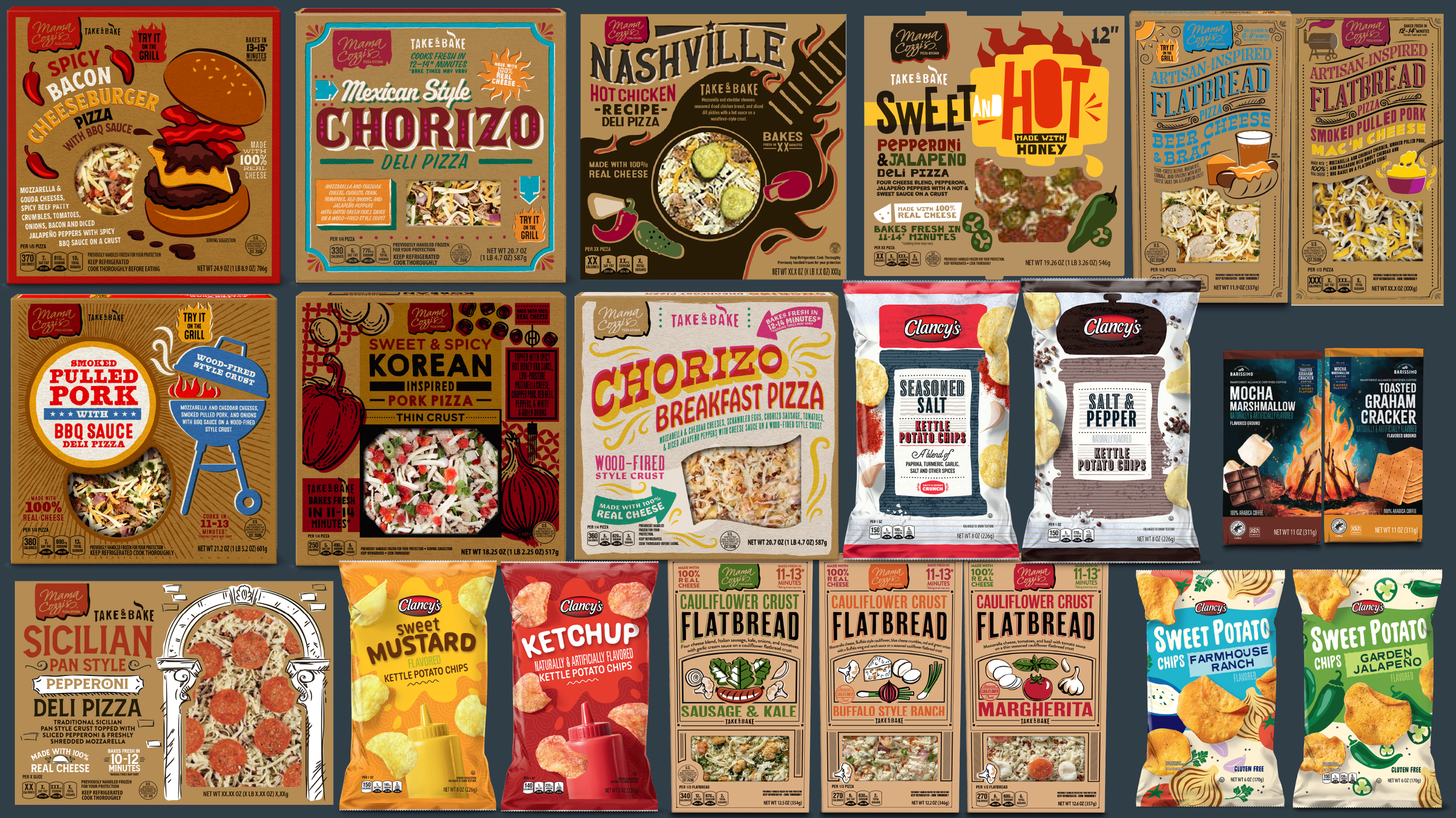
Representative products from the portfolio where I supported brand and creative execution across a multi-category retail packaging ecosystem.
Context
I supported brand and creative execution for a large-scale retail portfolio spanning 500+ SKUs across multiple regulated consumer categories.
The work took place in a fast-moving environment with concurrent redesign initiatives, evolving briefs, and tight production timelines.
My role sat where brand, creative, operations, and external production partners intersect, with ownership through final design execution and continued consultation during production.
Success required protecting brand standards while navigating shifting requirements, supplier capabilities, and regulatory constraints.
CHALLENGE
Frequent midstream changes introduced risk to brand consistency and production feasibility. Strategic goals, dielines, timelines, and supplier limitations could shift during execution, increasing the likelihood of rework, delays, or compromised brand integrity if not addressed early.
APPROACH
To navigate this environment, I applied a consistent decision framework focused on feasibility, brand stewardship, and risk management.
Key principles:
Assess downstream impact before reacting to change
Treat core brand standards as non-negotiable
Resolve complexity internally before escalating externally
Maintain forward momentum while protecting execution quality
Operational flexibility existed within internal processes, sequencing, and approvals, while core brand elements and visual standards remained protected.
Execution
Execution centered on identifying and resolving risk before work entered production while remaining engaged through downstream stages where issues could emerge.
This included:
Validating printability, technical constraints, and supplier capabilities prior to production handoff
Confirming regulatory requirements and product claims with suppliers for regulated categories
Providing in-context feedback during design development to reduce rework
Maintaining weekly client working sessions to surface changes early
Supporting production teams in evaluating tradeoffs when late-stage adjustments were required
Throughout the process, I served as the primary steward of brand integrity and clarity of delivery.
Impact
Proactively addressing feasibility and maintaining involvement through production significantly improved execution reliability across the portfolio.
Results included:
Reduced late-stage production issues tied to printability or supplier limitations
Fewer delays related to regulatory or mandatory packaging requirements
Designs entering production are already vetted for technical constraints
Greater brand consistency despite frequent change
The approach strengthened client trust and positioned me as a consultative partner for complex brand and production decisions.
THOUGHTS
This experience reinforced that protecting brand integrity at scale requires more than strong creative direction. It depends on operational clarity, early risk assessment, and consistent stewardship across teams and partners. Addressing complexity upstream creates flexibility downstream, allowing brands to move quickly without compromising quality.
Managing Timeline Compression in Complex Programs
In large-scale operational environments, accelerated timelines are often treated as a resourcing issue. In practice, timeline compression usually reflects deeper shifts across stakeholder alignment, governance timing, upstream inputs, or evolving business priorities.
Over time, I’ve found that successful execution depends less on simply increasing speed and more on identifying the source of compression early. Different situations require different operational responses:
parallel path execution
dependency reassessment
earlier stakeholder alignment
governance simplification
phased delivery approaches
One of the most consistent lessons across complex programs is that operational clarity reduces downstream risk more effectively than brute-force acceleration. Clear ownership structures, realistic assumptions, and proactive communication create more sustainable delivery systems than reactive escalation alone.
My work has consistently centered around building scalable operational structures that support speed, consistency, and cross-functional alignment across high-volume, fast-moving environments.